First of all, if you’re in a rough spot and thinking about trying AA: do it. You should go. 110%. Go now! Close this tab immediately and go find your nearest meeting. Don’t let my whiny, nitpicky little complaints in this post deter you. Go find out what it’s like for yourself. I firmly believe that everyone, especially folks who struggle with drinking, can benefit greatly from AA, and it really does save lives.
But if you give it your best shot and it still doesn’t help, don’t give up. There are other ways out.
.
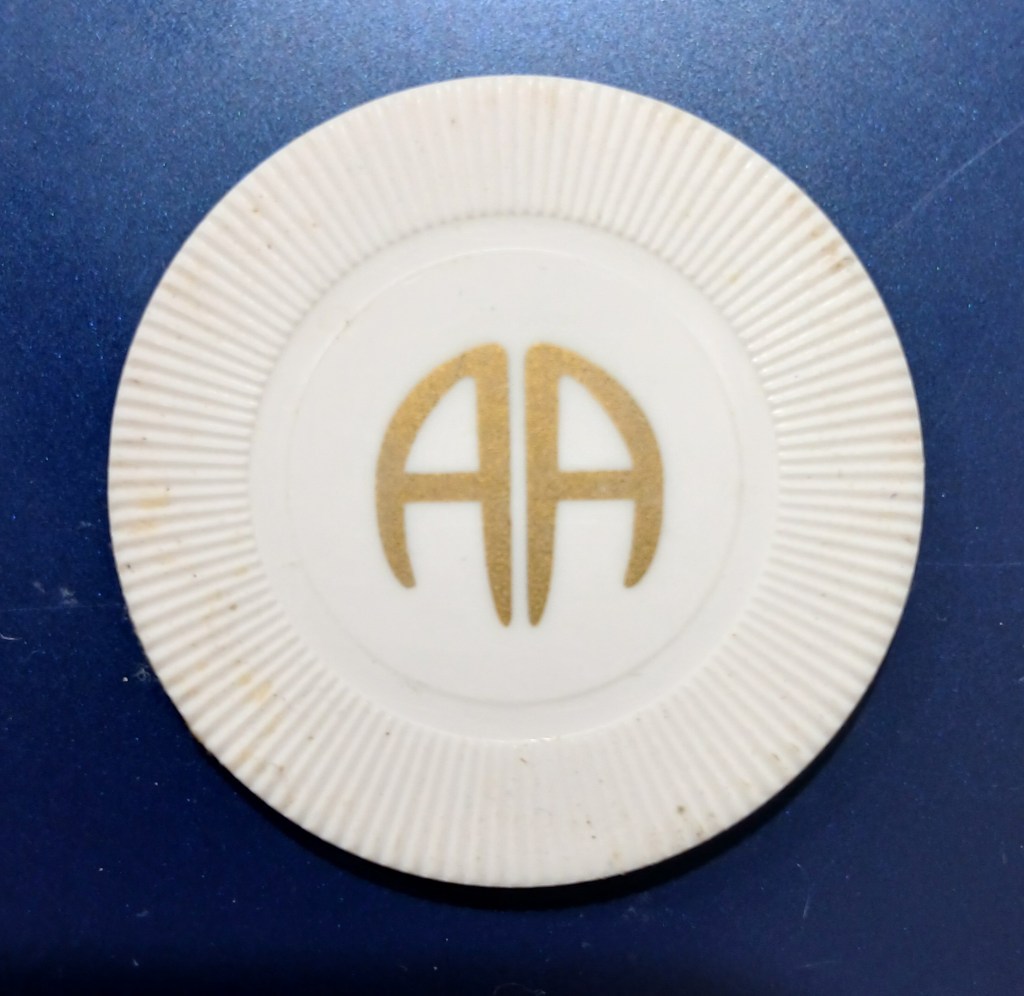
March is Sobriety Month here at MiTHology (4.0), and so, going along with that theme, I wanna talk for a minute about the program of Alcoholics Anonymous.
You’ve probably heard me mention in previous posts that my sobriety saga began in AA. For some time, I was quite entrenched in it. But, I no longer go to meetings. In the following post I will elaborate on why that is.
Here’s the abridged version of my early sobriety lore. January 2015, at age 25: started going to AA meetings, and fell in love with it: the watertight logical soundness of the philosophy, the black-and-white clarity, the infinitely quotable literature. I went to at least one meeting a day, religiously. Spent four years in the rooms, going through the 12 Steps with two different sponsors, doing it all very “by the book,” achieving a year and change here, almost a year there, and many stretches of a few days or weeks. It didn’t stick though. On paper, I loved AA, but in practice, in my own life, it didn’t seem to work. Early 2019, at age 29: still not sober, fed up with it all, quit meetings and finally just struck out on my own and decided to try it in isolation. Seven years later, here I am, still sober.
So, AA didn’t work for me long-term. But I still love it, and would encourage anyone to try it.
Some people accuse AA of being a cult. That is a ridiculous accusation (and I’m willing to bet that those people probably got their feelings hurt by some sponsor’s brutal honesty). It’s not a cult. Yes, it is religious – which, imo, proves that at least some semblance of religion is necessary for basic human functioning, if the human in question is sane – but it’s about as secular as a religious program can be, so that anyone, even an atheist, can get on board. (If you can’t deal with AA because of the God stuff, then that’s a you problem; it’s not only possible, but encouraged, to make your Higher Power anything at all, as long as it’s not yourself.)
Some people complain that the program is too trite, its literature and signage too loaded with sappy little truisms that might be enlightening if you’re a total brainless doofus who’s never had a single coherent introspective thought in your life, but aren’t substantial or deep enough for an intelligent mind to really grasp onto or be moved by.
But here’s the thing: all those sappy little truisms, are truisms precisely because they are true. So many of the important truths of being a human are really very simple. We love to overcomplicate matters, we love to think that we are special and advanced – but the truth is, no one is too smart for the things they teach you in AA. If you think you are, then again, that’s a you problem.
So yes, I support AA and have great respect for those who thrive in it. Why, then, do I not participate myself?
I guess I’m a hypocrite. I’m guilty of the very thing that I just accused other people of doing: thinking my situation is too complicated, too unique. A big part of AA is Fellowship. I have AVPD, which makes “Fellowship” rather… tricky. It’s hard for me to reap much benefit from all that fellowship. It’s like I have an allergy to it. Some people are allergic to certain medicines; those people have to find alternative treatments.
Maybe if I didn’t have this disorder, I’d have been able to thrive in AA. I really wanted to. Desperately, in fact. If you know me, you know I’ve always had complicated (there it is) feelings about being a misfit; I’m kinda proud of it, but also I’ve always longed to belong somewhere, to find My People. I thought maybe the AAs were My People at last, but alas, the search continues. AVPD makes it really hard to be a participating member of a group like that.
But even if not for the AVPD mucking things up, I’m not sure if I’m as completely enamored of the AA way of thinking as I used to be. There are a few points about it that I take issue with.
(1) Some Of Us Actually Have Self-Awareness
The big one is this. AA’s Twelve Steps presume that you lack self-awareness; that you are lying to yourself about things, that you are avoiding taking responsibility for your own BS.
Some of us have the opposite problem. We know all the things that are wrong with us; trust me, we know them very well. We do take responsibility for our own failings, and already feel bad about them. Constantly. To a fault. AA was not designed with people like us in mind.
And I know that a seasoned AA, reading this, would tell me: “you’re just not being honest with yourself 😇”, which is like their trump card. You can always accuse someone of not being honest with themselves, because they have no way to prove you wrong.
Doing the Fourth and Fifth Steps never revealed anything to me about myself. There was never a breakthrough moment. I didn’t feel that seen or understood. Despite my best efforts, I didn’t feel like I’d bared my soul. It was just kinda tedious and awkward.
I actually regret both my Fifth Steps because, in trying to do everything by the book – “don’t trust your instincts, look where they got you! Trust your sponsor, who’s clearly doing what you’ve proven yourself unable to do!” – in taking this advice and ignoring my intuition, I was led to do some really awkward and unnecessary and even inappropriate Sixth Steps, which to this day I cringe painfully about. I was so desperate to do everything right, and really didn’t know whether to trust myself at all, which is understandable; but I wish I’d trusted my gut just a little.
Believe me! I wish I’d experienced a breakthrough with the Fifth Step. I’d kill to learn the secret, to be able to name the cause of my issues, to identify where the issue has actually been hiding so that I could begin to tackle it. I’ve spent so much of my life trying to figure out what my dark secret was, what I was hiding from myself, what was I being dishonest with myself about, like some repressed trauma or something. Nope. It wasn’t until I got my AVPD diagnosis that I realized that what I’d known intuitively all along was right: the problem was just me, my whole personality. It wasn’t something specific that I could identify and heal from.
“AA works for everyone,” the seasoned AA would reply, “and if you think you’re the exception, then you’re just not being honest with yourself 😇.” Ha!, I wish I weren’t being honest with myself!
I agree that everyone can learn something from AA – I don’t think anyone out there is “too smart” for it. But I do think some people have certain dispositions or conditions that make them less-promising candidates for the AA treatment. And having a high degree of self-awareness, or an untreatable disorder that affects one’s ability to be social, are both examples of such dispositions.
Which is not to say that you shouldn’t try AA, if you’re considering it. You absolutely should. Go and try it for yourself, but if it doesn’t work, don’t give up.
(2) Sponsors Aren’t Priests
My second beef with AA is this: sponsors are not priests. “Just do whatever your sponsor says” is not always good advice! These people don’t have psych degrees, they didn’t go to seminary – they are not necessarily equipped to be spiritual advisors or to give good advice.
I know, I know – the sponsor isn’t meant to be infallible, and if you treat them that way, that’s a you problem (all problems are you problems, in AA; that’s not hyperbole, that’s doctrine). The sponsor is just supposed to be a mentor, and their advice is supposed to be a simple “here’s what I would do in your shoes to help you stay sober.” I get that. But I guess as a Catholic, it strikes me as problematic to see folks in need relying on some other random alcoholic to hear their Fifth Step rather than a Priest in the Sacrament of Penance. This is where the program’s lack of actual religion causes it to fall short.
And yeah, I know, the very fact that the sponsor isn’t a professional nor a cleric is part of the magic. They’re just another recovering alcoholic with no particular obligation to you, not getting a paycheck, just doing this for the sheer love of the game. I understand that, in theory. But I still think you’re better off with the Sacraments, which are much safer, and have much more real effects on your soul.
(To be fair, I don’t really have any IRL friends, either, and still kinda struggle to understand the hows and whys of IRL human friendship; so this might just be a me problem.)
(3) Some Of Us Need To Touch Grass
My third and final beef with AA, and the main reason I don’t go back anymore, is really a personal one – not a philosophical issue, just a subjective experience.
For me personally, remaining steeped in the atmosphere of early sobriety, spending all those hours talking about booze and hearing about booze, making it such a huge part of my consciousness, is actually unhelpful. I had to move on. I had to touch grass.
Some people really need to stay in the program. For those people, their addiction was all they had, and so their life is just a vacuum without it, they have zero other passions or hobbies or interests. That’s not meant to be disparaging. It’s just a different type of addicted person. A person like that needs to stay entrenched in AA, needs to make sobriety their whole life and pastime, because the only alternative is going back to drinking. I get that. I feel for those people. I support them. I hope they never miss a single meeting.
However, I am fortunate to be someone who – even though booze was my #1 and held a special place in my heart that nothing else ever will occupy – cares about and enjoys other things as well, such as: my family, my imaginary inner world, reading, writing, art, my actual religion, watching TV, & etc. So I was able to kind of build a life and identity using those, when I got sober. Some people don’t have those to work with. It doesn’t make them more valid or their addiction more deserving of treatment. It’s just a different manifestation of the same disease.
Which is why I only started to get better once I stepped out of those rooms. But, still, some of the stuff I leaned in there was really invaluable; I got some great advice, met some great people, and can honestly say that no one there was ever cruel or shady or judgmental towards me – people were completely genuine and sincere. The magic is real. It just doesn’t work on me.
I kinda wish it did. I’d love to go back, because I miss it, the routine, the warmth, the familiar smells of coffee and basement. But there’d be no point. I’m not going to do the Steps again nor get a sponsor again — why would I?
And even though they’d welcome me back, and embrace me as one of their own, I know I’m unfortunately really not.
“If you think you’re not one of us, you’re just not being honest with yourself 😇,” they’d surely reply.
To which I’d respond: being sober in AA doesn’t make you omniscient. AA is not the Church. It’s just a bunch of people, and not all people have the same brain. But you know what?, if it helps you stay sober to believe that, that I, and literally anyone who’s ever been addicted to alcohol, “need” to be in AA, that I’d be better off there and that I’m doomed to relapse if I don’t go back to a meeting – then go ahead. You do you. I don’t want to prove you wrong if it means puttimg a crack in your support structure. I don’t need to win this argument at the possible price of your life.
.
So yeah. If you’re newly sober or thinking about getting sober and reading this, and starting to doubt whether AA will work for you, I beg you, I am literally begging you, to go try it. This is just my stupid little blog where I come to process my stupid little feewings; and, after all, there’s a chance I’m not being honest with myself, and lack the self-awareness to see that! (😵💫) In any case, you really need to go check it out for yourself. My email address’s in the “about” page if you wanna talk about it (or anything else).
 MiTHology (4.0)